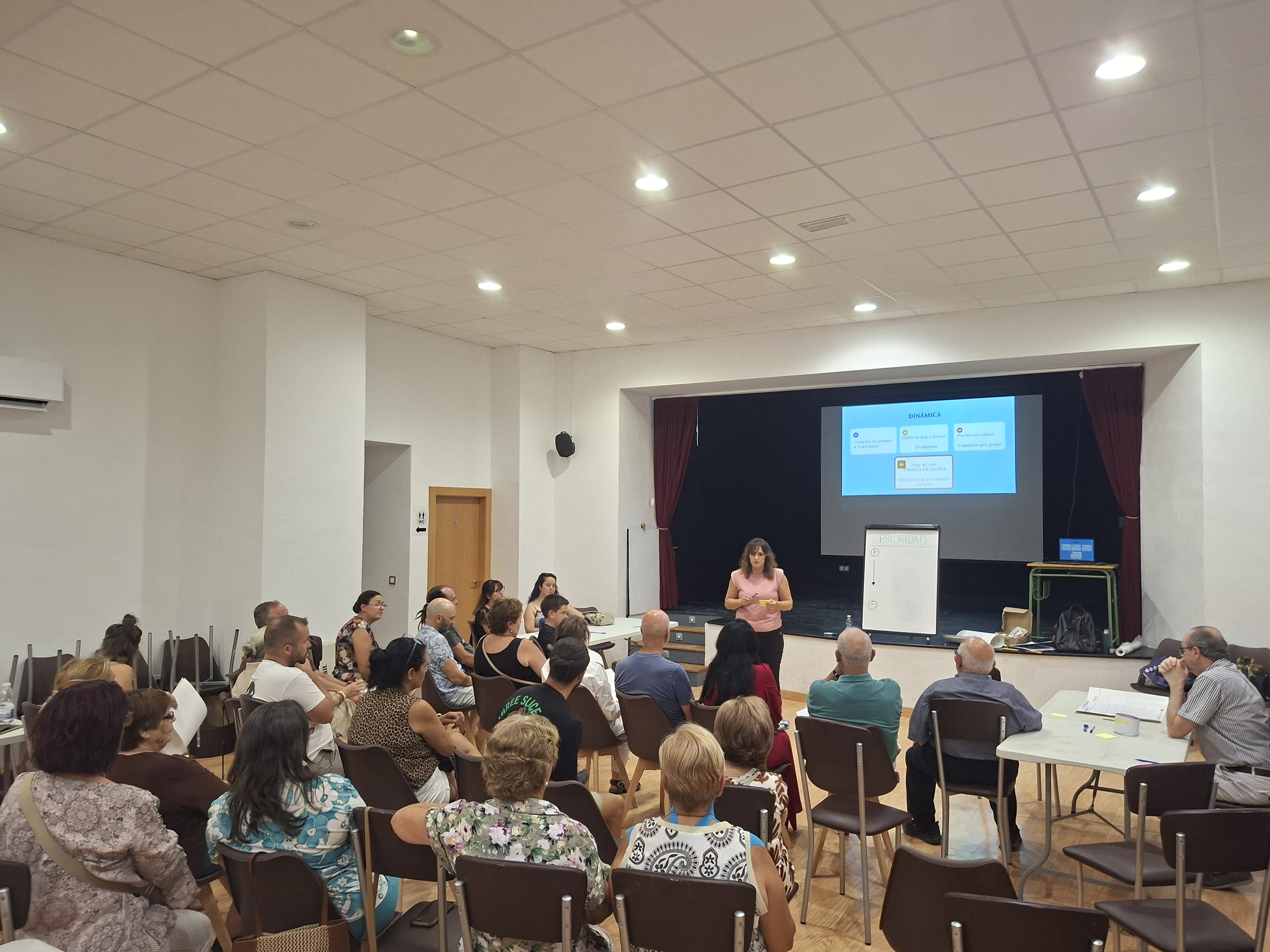
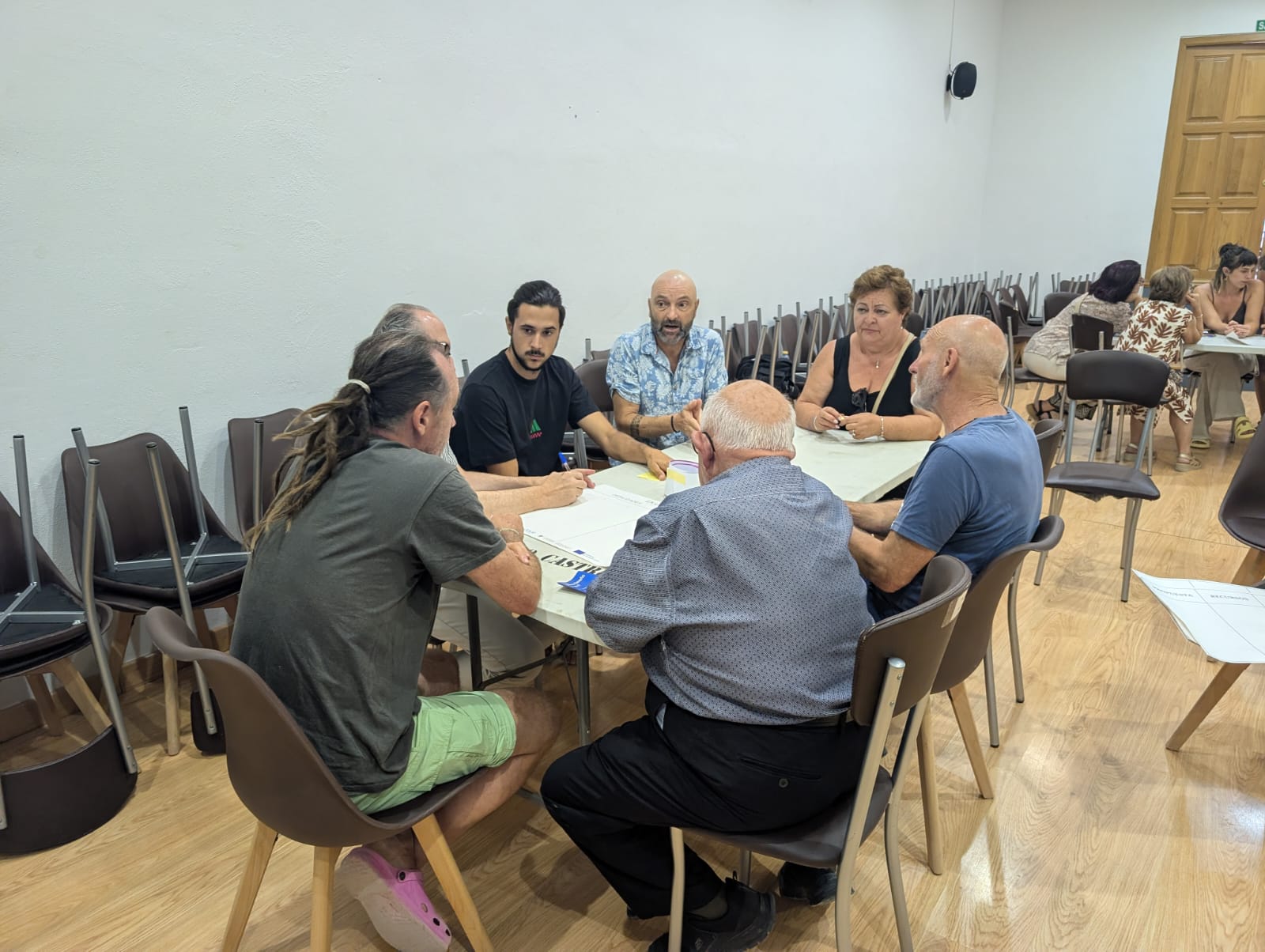
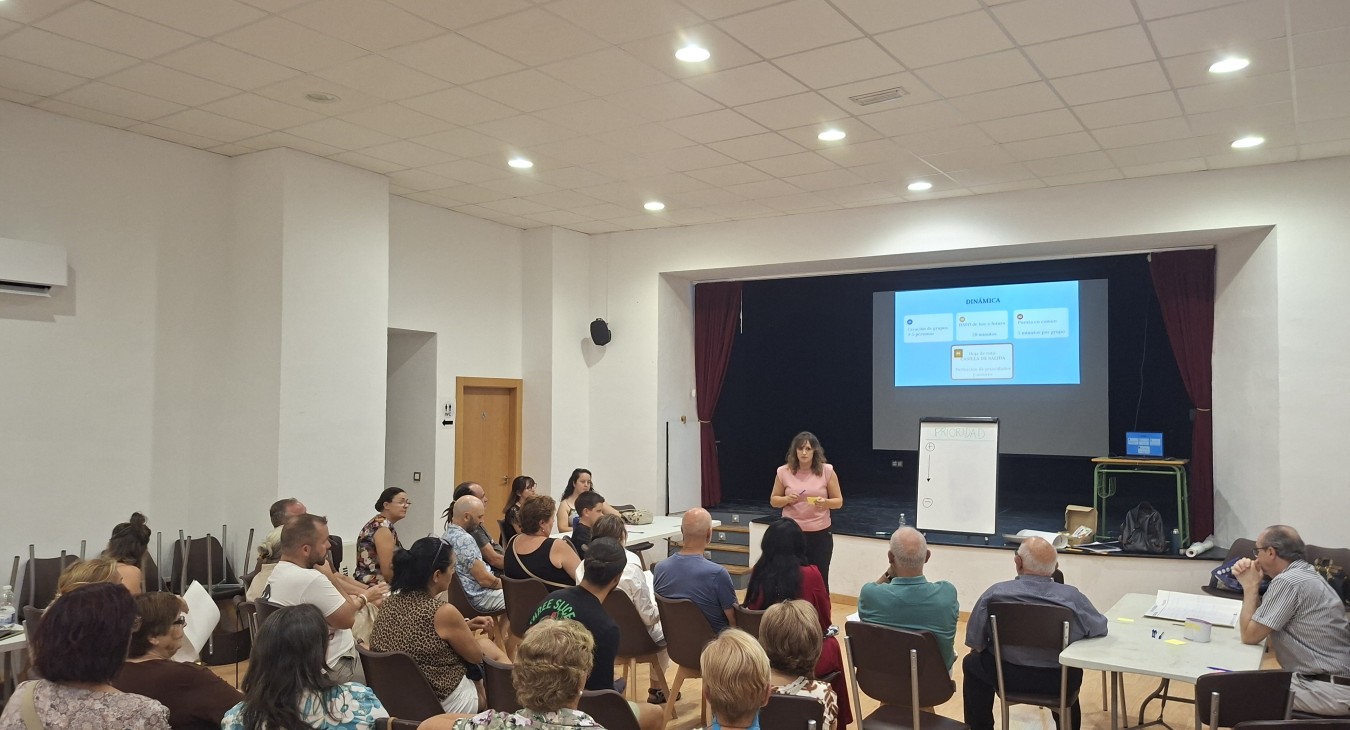
On 23 July 2026, we held the first meeting towards the creation of the Castril Heritage Community. The event brought together 30 participants from diverse backgrounds, including local residents, associations, institutional representatives and other local stakeholders, with the aim of creating a participatory space to reflect collectively on the present and future of heritage and tourism in the municipality.
During the meeting, the project was introduced and the reasons why Castril had been selected as a pilot case were explained. The municipality will serve as a testing ground for new approaches to tourism development based on citizen participation, heritage protection, and the promotion of more sustainable and equitable economic models. Previous initiatives carried out by MEMOLab in Castril were also presented, including the archaeological research at Cueva de la Arena and several projects focused on the study, restoration and enhancement of the municipality's traditional irrigation heritage in collaboration with the Castril Irrigation Community.
One of the central themes of the session was the introduction of the concept of a Heritage Community, inspired by the Council of Europe's Faro Convention. This model was presented as a way of enabling citizens to play an active role in identifying, safeguarding and promoting their cultural heritage, transforming it into a resource that strengthens local identity, creates new development opportunities and collectively addresses the challenges associated with tourism.
The session also showcased several national and international examples of heritage communities and collaborative initiatives that have successfully fostered local development through the shared management of cultural heritage, illustrating different forms of cooperation between citizens, public authorities, businesses and civil society organisations.
The second part of the meeting was dedicated to a participatory workshop in which attendees worked in small groups to analyse the current situation of Castril's heritage using a SWOT analysis. Through this exercise, participants identified the municipality's strengths, weaknesses, opportunities and threats, as well as the main priorities for action over the coming years. The proposals were then discussed collectively and prioritised, laying the foundations for a shared roadmap towards the future Heritage Community.
The event concluded with the presentation of the next steps in the participatory process. These include the preparation of a report summarising the workshop's outcomes, the launch of the membership process for the Castril Heritage Community, and the organisation of future working sessions aimed at transforming the ideas generated during this first meeting into concrete projects for the municipality.
This first meeting marks the beginning of an open and collaborative process that seeks to place the local community at the heart of heritage management, promoting a model of tourism and territorial development that is more sustainable, inclusive and respectful of Castril's unique identity.the creation of the Castril Heritage Community