‘From the domestic forest to industrial plantations: a long-term history of the South Morvan forest’
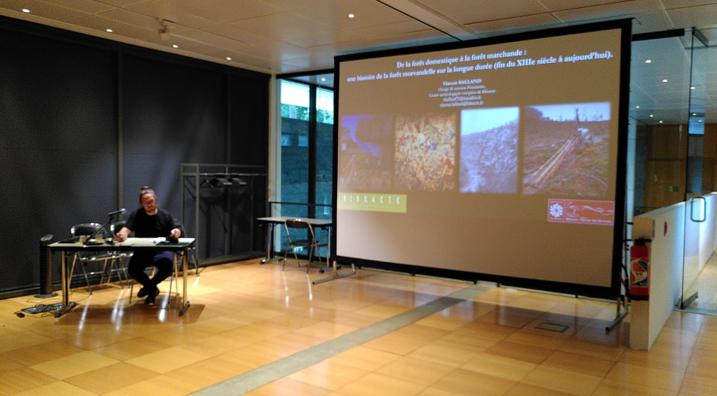
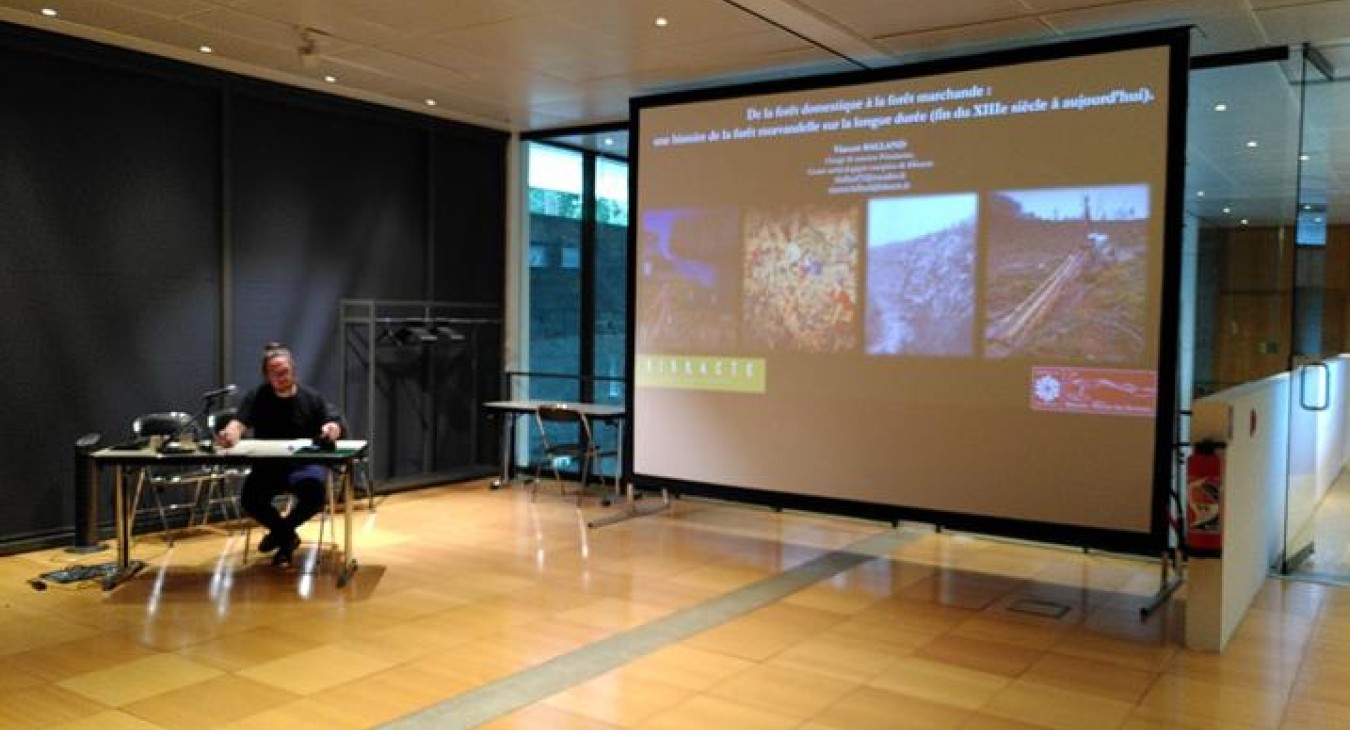
Saturday 21 September 2024 as part of the European Heritage Days, the Bibracte museum organised a talk by Vincent Balland, heritage officer at Bibracte, who holds a PhD in environmental history (University of Bourgogne-Franche Comté). The aim of the lecture was to give people attached to the landscape of the Grand Site de France du Morvan des Sommets a better understanding of the impact of forest management in the past on the present and future of the landscape heritage. This conference, organised as part of the SECreTOUR programme, brought together around thirty participants, who (re)discovered the heritage forest of the Grand Site de France of Bibracte-Morvan des Sommets, using an interdisciplinary historical approach based on the cross-referencing of handwritten archives, natural deposits in peat bogs and LiDAR.
More information on https://www.bibracte.fr/de-la-foret-domestique-la-foret-marchande-une-histoire-de-la-foret-morvandelle-sur-la-longue-duree
Summary of the conference:
‘Clear-cutting’, “afforestation with conifers”, “monoculture”, “lack of regeneration”: these are the words that recur throughout the forestry conflict in the Morvan. Regularly, in the local and national media, residents, activists, owners and foresters talk about the Morvan forest and the risk of a complete industrialization of harvesting.
What if the use of these expressions in the Morvan had their roots in the distant past? What if the antagonisms experienced in the region since the 1950s acted like a specter that awakens old wounds: those of a forest strongly marked by intensive forestry designed to supply a distant market. Between the middle of the 16th century and the beginning of the 20th century, i.e. for almost three centuries, the beech-oak forests of the Morvan provided an abundance of firewood for the city of Paris.
This economy created sharp contrasts in the social landscape between the big winners and the local farming population employed to supply Paris. In the forests, this exploitation has left a lasting mark on the landscape in the form of coppice producing standardized logs. This situation, reproduced over three centuries, has helped to shape the view that the Morvan has never had, or would never have, the capacity for quality forestry.
However, if we look even further back, we see a forest that is quite different from the one geared towards market standards. From the thirteenth century to the mid-sixteenth century, the ‘petite montagne’ (small mountains) was crisscrossed by large forests with diversified economic functions, mainly geared towards local supply. However, a detailed study of medieval accounts and land registers shows the importance of the forest as a source of food, providing fruit for transhumant pig farming. Was this also the case in the Morvan during the Early Middle Ages, Antiquity or Protohistory? And what if the study of the Middle Ages provided clues for the study of earlier periods?