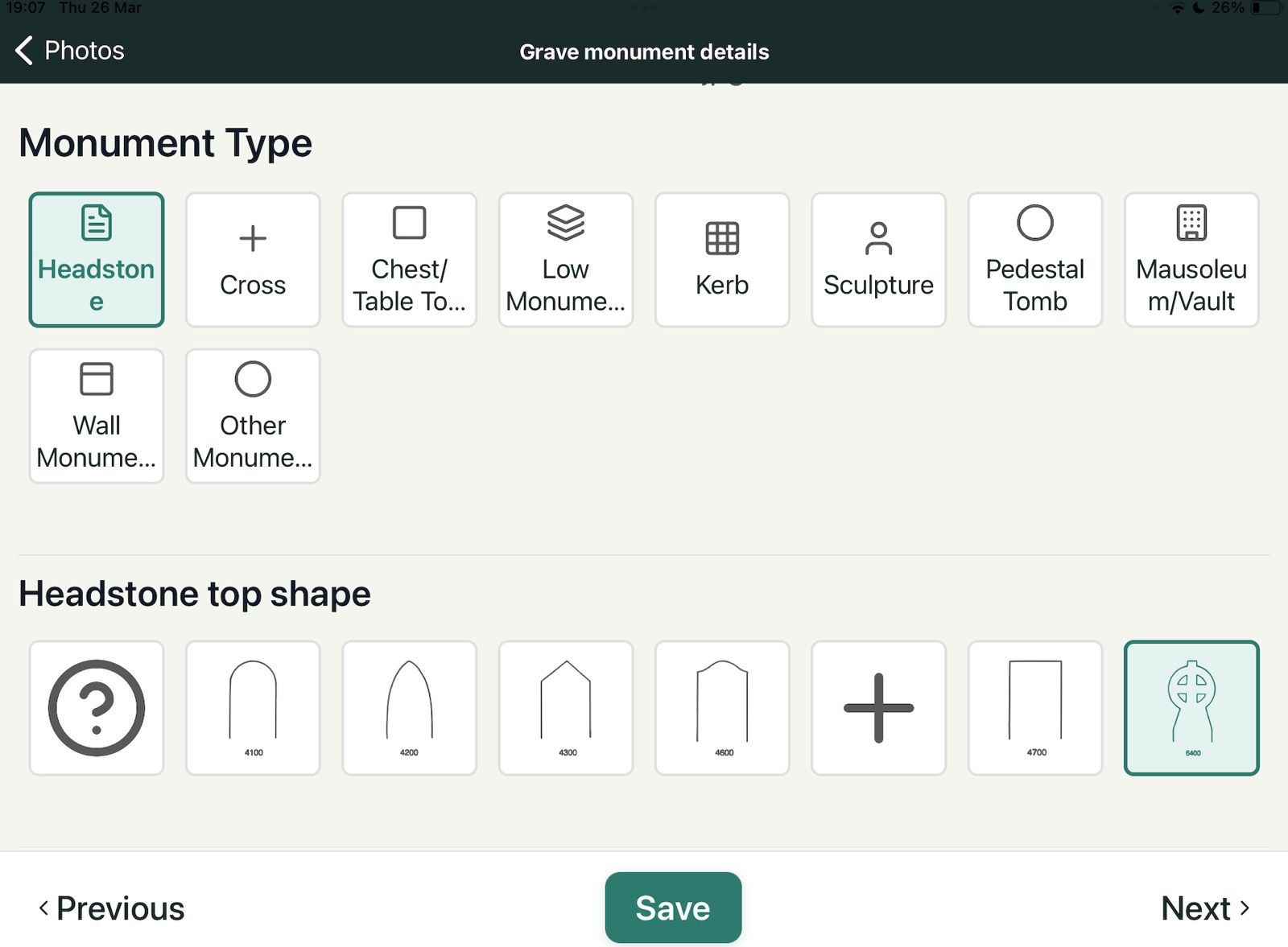
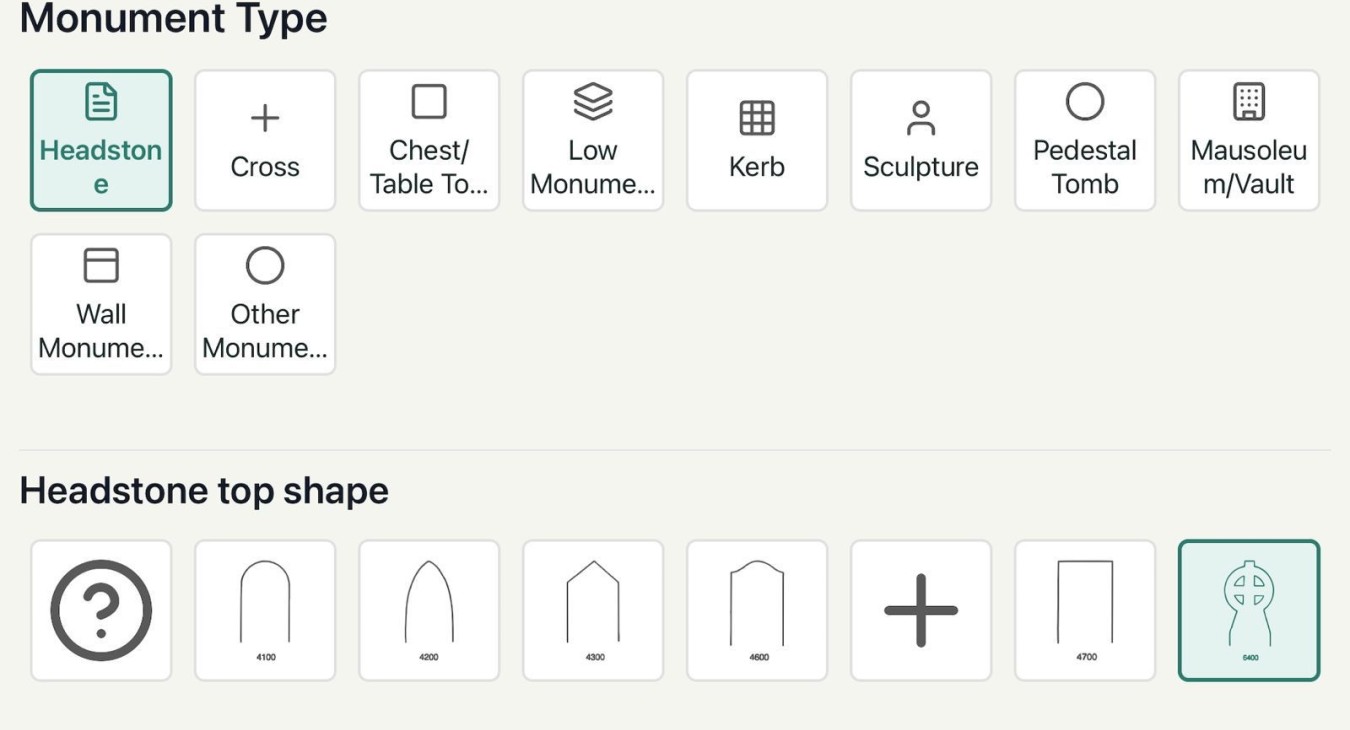
A digital camera with a GPS is the most important tool we have used in our community archaeology project, historicgraves.com, since 2010. We devised a survey methodology combining a digital camera, Professor Harold Mytum's schema for archaeologically recording graveyards, and a Drupal web platform for publishing our surveys. Together with over 600 community volunteer groups, we have surveyed and published nearly 1,000 graveyards based on strong, practical archaeological principles.
While based on an archaeological data schema, we struggled to get archaeological funding for our surveys. Instead, genealogy and community heritage were our main funding sources. As a result, we developed a phased approach to implementing the Mytum schema. We have about 100,000 historic gravestone photos online and mapped, and about 80% of those have full inscriptions. From an archaeological data schema perspective, the dataset is incomplete, but it is also one of the largest published assemblages of 18th, 19th century and 20th century mortuary monuments, not only in Ireland, but in the world. Working in grassroots heritage, we are comfortable with our dataset being incomplete - it's just not finished yet. What we think of as progressive completeness rather than incompleteness.
Now I return to the topic of our most important tools: the digital camera (and the Drupal website). Well, now there’s a new kid on the block, and that's AI/LLMs. Since late 2023 we have been using LLMs to transcribe and digitise handwritten record sheets containing headstone inscriptions and then parsing them into data sheets, which we import into the website. This work saves community groups approximately 60 hours of typing per project, and it generates detailed, important archaeological data.
Recently, we have used LLMs to analyse our survey dataset. Imagine you download 200 gravestone records for one parish with the names of families and townlands and date ranges for when the families were in those townlands, and compare that with 19th century land valuation records?. These new technologies are allowing us to work on an archaeology of families and to conduct social history analysis which was previously beyond our reach.
For the last year, we have been using AI to assist us in writing our own survey app, and it's nearly ready for public use.
However, there's a mindset problem in dealing with AI. People are struggling to understand the value of the new technologies to surveyors like us and our community partners. We now have a technology which can transcribe the inscription from a survey photograph of a headstone. Previously, it was transcribing our handwritten record sheets, and now in many cases, it's transcribing the actual survey photograph of the gravestone. It doesn't work on all photographs and is almost never 100% accurate, but it does produce results which aid our community surveys.
Field archaeology is practical and pragmatic. There's always a supervisor or director who checks the work. There are layers of checks built into the work, and when LLMs are part of the team producing the work, we are not human verifiers of the LLM. Which is how many people have been framing these recent changes. People think the LLM is primary, and the humans are verifiers, secondary. When we use an LLM, we are not reduced to the role of human verifiers. It is just another tool in our toolkit. Since 2010 we have built a recording system which is comfortable being incomplete, but which is always working towards completion, albeit measured across decades and now assisted by new technologies.
We've built a system where human recorders drive the process, working within the economic resources available to us. LLMs are a productive multiplier in our experience. LLMs don't think. LLMs don't know what they don't know. LLMs could not care less if we survey graveyards (unless they want to scrape our data for model training). They are, though, extremely useful and by combining strong archaeological fieldwork and research principles with strong computer science principles, they do not hallucinate, they do not drift, and they do not "lie". So get the mindset right. It's another valuable tool. Learn how to use it properly, and it will benefit citizen science and community archaeology projects like ours immeasurably.
In conclusion, with over 100,000 gravestones recorded and online we can now use AI to assign a Mytum schema typology to the gravestones - maybe 70% of the online photos will be accurately identified as Mytum’s 4000, 4100, 6310 and so on. We can also extract Date of Monument from typology and inscription analysis. The dataset is filling out, accumulating, slowly moving to completion. Progressive completeness in action; decades in the making. These are not rescue excavations or surveys in advance of removal - these are communities valuing their own heritage for the present and the future. Every community volunteer who knelt before a gravestone and filled in a record sheet will now find their efforts augmented by an API call to OpenAi or Gemini or very shortly to a 5 grand desktop computer sitting in an office in west Waterford without the need to be sent to the cloud.
Times are changing but they are not changing that much. There’s still a lot of effort required by communities but the benefits accrue to the communities if we maintain good standards based on proven principles.
References