There’s a saying in Irish
Fiche bliain ag fás. | Twenty years a’growin. |
Fiche bliain faoi bhláth. | Twenty years a’bloom. |
Fiche bliain ag cromadh. | Twenty years a’stoopin. |
Fiche bliain gur cuma ann nó as. | Twenty years decline. |
The spoken Irish is more poetic (have a listen here) but the point is obvious; life is experienced in cycles.
In SECreTOUR we are researching sustainable heritage tourism practices which benefit local communities. In our Communication and Dissemination plan (C&D) for the project we outlined a number of digital and social media experiments and a year ago our focus was on email newsletters and social media and we made one mention of AI in the context of its potential for translation and communications.
Since then social media has been in flux, our intended experiments comparing centralised with federated social media are being affected by this flux. Initial follow rates were high in some platforms but soon proved to be bot driven. Attention has reverted to weblogging and Dave Winer’s musings on POSSE (Publish (on your) Own Site, Syndicate Elsewhere) show this approach isn’t solved yet but there is a right direction to sail in.
In our second consortium meeting (April 2025) when the whole SECreTOUR team spent two days discussing work packages, pilots and business models one key point emerged. We better understood the cultural landscape of the Morvan when taking a long-term view of that landscape. And as we wrestle with implementing the C&D plan we believe taking a longer term view of digital communications is warranted.
A quick survey of our team revealed a small few of us first registered email addresses around 1990/91. Some of us remembered Usenet/Gopher/Telnet not to mind html and Lynx and many over 50s in the room remember the first graphic browser Mosaic released in 1993. Thirty two years ago, or thereabouts, a digital revolution started which led immediately to hand-rolled websites and communication innovations such as weblogging (1994/6) which with Really Simple Syndication (RSS - 1999) led to Web 2.0 (2003-5) which in turn lead to Social Media (2006 onwards). Social media is almost 20 years old and I remember when it started and it was awful even then. Social visionaries and snake oil salespeople jostled for eyeballs and the world changed considerably. But those ‘social media mavens’ (that’s what they called themselves) were right in one way and now social media affects national elections and global politics.
When we view our digital communications plan in this context we see waves of digital innovation and transformation of elements of our societies and we now, one year into our SECretour project, judge that AI is already having, and will continue to have, a similar impact as social media. As we work on how to represent local communities in peripheral areas we think of the old Irish phrase (Fiche bliain ag fás…) and wonder will our communities flower with the aid of AI/LLM or will they decline?
Early in the project we were conscious of how AI might affect the quality of our work. A projected explosion in AI slop soon dominating web content would not be good for local communities. We weren’t sure how it would affect our own research and writing but we agreed to ‘keep an eye’ on it. One year into the project the likely impact of AI is more certain.
The pros of AI in these kinds of research projects are also clearer. As a technical reading companion AI is excellent. This week I downloaded a recent publication on aDNA in Irish archaeology. I read the article and then using GoogleNotebookLM went back through it all, asking for clarification of technical details I did not understand (what is a haplotype? what is SNP Capture?) and then double checking my reading of the paragraphs against the AI’s own approach. It is like having a colleague read the article with you and I definitely understood the paper better for the use of the AI. Throughout I saved the answers provided and those notes now form part of a research knowledge management system.
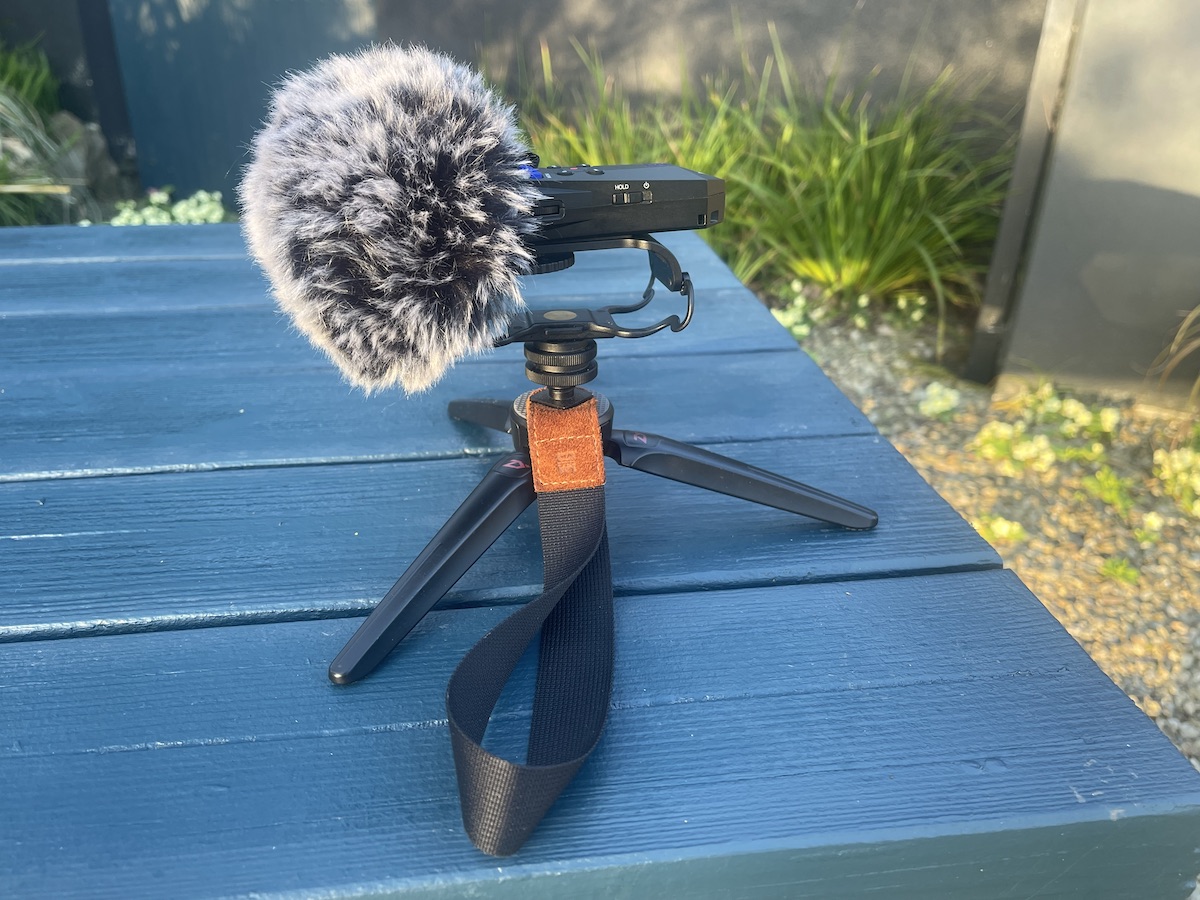
Another pro of AI is its excellent memory (with prompting). I made handwritten notes of our meeting in France last week but I also, with the agreement of colleagues, recorded most of the discussions with an audio recorder. The ubiquitous audio recording (not hidden but clearly visible to all) resulted in ten audio files (8GBs in size) and over 120 pages of transcribed notes now shared via google docs. Meetings took two days, backups were uploaded from rural France each night and Otter transcribed the text almost immediately. A few hours of rough and ready editing then prepared the meeting minutes for sharing. When we delved (in its pure sense and not a relict of AI writing) into the meeting transcript we then identified key tasks, agreements on actions and future plans as a strong backup to our individual notes/memories. (The same methodology works in community heritage projects but permission is required at every step of the way which is culturally difficult to achieve. The extent to which we digitise our daily lives is part of the current debate).
The main con of AI is that of authenticity. None of this blog post was written by AI but if it was would it be less authentic? Tyler Cowen advises we "write for the AI’s" “treat it as if it were human”. When we do so will it clone our way of thinking and be able to mirror our words? Or is writing for the AI now a prerequisite to ensure our voices are heard and strengthen the digital commons?
One of our team talked about older women in the Vlach community of southern Albania being the ‘memory keepers’ of their communities. A short video interview with those memory keepers is now sufficient to clone their voices and their appearance. We ask, is there anything good about the current videos in which AI is used to clone people and to put words into their mouths? They are obviously false, inauthentic, distracting, but soon the quality will improve and what will we do then as scripts written by AI are used to sell messaging which do not represent the needs or goals of local communities they emulate?
In conclusion, digital innovation can be used for disruption or it can be used equally to protect social values we hold dear. The social problems we face in Europe today are all now within a digital context - we’ve been twenty years a’growing - what next? A world of echochambers, AI slop, misinformation or one marrying good intentions with sound principles to produce positive outcomes? Within SECreTOUR we have agreed to add AI/LLMs to our communication and dissemination toolsets. We have agreed to experiment with ‘AI as a colleague’ - not replacing team members but assessing does it work. The aim being to investigate can it be used to improve authenticity to support the real people, in the real places, in which we work.
By John Tierney (https://mastodon.ie/@JohnTierney)